Article Plan: Giant Hot Water Tank Manual
This comprehensive manual details installation, operation, troubleshooting, and maintenance for Giant hot water tanks, covering both gas and electric models.
Giant hot water tanks are engineered for reliable and efficient performance, providing consistent hot water for residential use. This manual serves as a guide to understanding, installing, operating, and maintaining your Giant tank. Whether you have a gas or electric model, proper installation and regular maintenance are crucial for longevity and safety.
Common issues like gradual temperature drops or noises (gurgling, popping) are addressed, alongside troubleshooting steps. Understanding the tank’s components – from the burner/heating element to the pressure relief valve – empowers homeowners. This manual aims to help you maximize efficiency and address problems before they escalate, potentially saving on repair costs and ensuring years of dependable hot water supply.
Understanding Your Giant Hot Water Tank Model
Giant offers a diverse range of hot water tank models, differing in capacity, energy source (gas or electric), and features. Identifying your specific model is the first step. Locate the model and serial number on the tank’s data plate – typically found on the exterior.
These numbers are vital when ordering replacement parts or contacting Giant support. Understanding your tank’s capacity (in gallons) helps determine hot water availability. Knowing if it’s a direct vent gas model or standard electric influences installation and safety procedures. Refer to the data plate for voltage/BTU ratings and other crucial specifications for optimal performance.
Safety Precautions
Prioritize safety when installing, operating, or servicing your Giant hot water tank. Electrical hazards are present with electric models – always disconnect power at the breaker before any work. Gas models require careful attention to gas line connections and ventilation to prevent leaks and carbon monoxide poisoning.
Scalding is a serious risk; set the thermostat to a safe temperature (120°F is recommended). Regularly test the pressure relief valve. Never attempt repairs if you’re uncomfortable or unqualified. Unplug the unit for a few seconds if issues arise, as a temporary fix.
Electrical Safety
Electrical shock is a severe hazard. Always disconnect the power supply at the circuit breaker before performing any maintenance or repairs on your Giant electric hot water tank. Verify the power is off with a non-contact voltage tester. Ensure proper grounding of the unit.
Never work with wet hands or in damp conditions. Inspect wiring for damage before re-energizing. If you are unsure about any electrical aspect, unplug the unit and consult a qualified electrician. A basic circuit diagram is available for reference.
Gas Safety (If Applicable)
Gas leaks pose a significant fire and explosion risk. If you smell gas, immediately evacuate the area and contact your gas company. Never attempt repairs yourself. Ensure proper ventilation around the Giant gas water heater. Regularly inspect gas connections for leaks using a soapy water solution.
A floating or yellow flame indicates improper combustion and requires professional attention. Be aware of high gas pressure issues. Familiarize yourself with the burner troubleshooting guide. Do not store flammable materials near the unit.
Scalding Prevention
Hot water can cause severe burns. Always supervise children and individuals with disabilities around the water heater. Set the thermostat to a safe temperature, generally 120°F (49°C) or lower, to minimize scalding risk.
Be cautious when drawing hot water, especially after periods of non-use, as initial temperatures may be higher. Consider installing anti-scald devices on faucets and showerheads. Regularly check water temperature to ensure it remains within a safe range. Giant prioritizes user safety; heed these warnings!
Components of a Giant Hot Water Tank
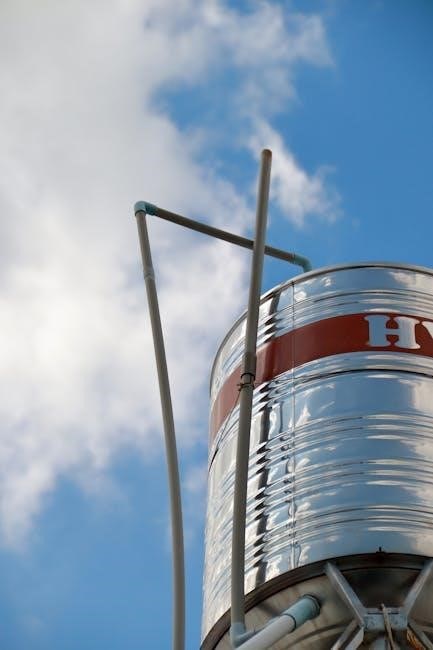
Giant hot water tanks comprise several key components working in unison. The tank itself, constructed from durable materials, stores heated water. A heating element (electric models) or burner (gas models) raises the water temperature. A precise thermostat regulates this temperature, ensuring consistent hot water delivery.
Crucially, a pressure relief valve safeguards against excessive pressure buildup. Understanding these parts is vital for maintenance and troubleshooting. Proper function of each component guarantees efficient and safe operation of your Giant water heater.
Tank Construction & Materials
Giant hot water tank construction prioritizes durability and longevity. Tanks are typically built with steel, often featuring a glass lining to resist corrosion from water. This lining protects the steel from rust, extending the tank’s lifespan significantly. External casings often incorporate insulation to minimize heat loss, improving energy efficiency;

The quality of materials directly impacts performance and reliability. Giant employs rigorous quality control during manufacturing to ensure tanks withstand internal pressure and temperature fluctuations, providing years of dependable hot water service.
Heating Element/Burner
Giant hot water tanks utilize either electric heating elements or gas burners to heat the water. Electric models feature submerged heating elements, typically two, positioned within the tank to efficiently transfer energy to the water. Gas models employ a burner assembly at the tank’s base, igniting gas to heat the surrounding water.
Burner flame stability and color are crucial indicators of proper operation in gas units. Giant designs these components for optimal heat transfer and safety, ensuring consistent hot water delivery. Regular inspection and maintenance are vital for both types.
Thermostat & Temperature Control
Giant hot water tanks rely on a thermostat to regulate water temperature, maintaining the setpoint for consistent hot water supply. These thermostats, either mechanical or digital, sense water temperature and cycle the heating element or burner on/off accordingly.
The control panel allows users to adjust the desired temperature. Giant prioritizes precise temperature control for both comfort and safety. Understanding the control panel’s functions is key to efficient operation. Proper thermostat calibration ensures accurate temperature readings and prevents scalding or insufficient heating.
Pressure Relief Valve
The pressure relief valve is a critical safety component of your Giant hot water tank, designed to prevent dangerous pressure buildup. Excessive pressure can occur due to overheating or water expansion. This valve automatically releases water if pressure exceeds safe limits, typically around 150 PSI.
Regular testing of the valve is crucial – carefully lift the lever to ensure it operates freely. Giant recommends annual inspection. A leaking or malfunctioning valve must be replaced immediately by a qualified technician to avoid potential tank rupture and ensure safe operation.
Installation Guide (Overview)
Professional installation of your Giant hot water tank is strongly recommended to ensure compliance with local codes and safe operation. The installation process involves connecting water supply lines, gas lines (for gas models), and electrical connections (for electric models). Proper venting is essential for gas tanks to prevent carbon monoxide buildup.
Before installation, verify adequate structural support and ensure the unit is level. Giant provides detailed installation manuals specific to each model; always consult these for precise instructions. Incorrect installation can void the warranty and create hazardous conditions.
Initial Startup & Filling the Tank
Before energizing your Giant hot water tank, ensure all connections are secure and leak-free. Slowly open the cold water supply valve, allowing the tank to fill completely. Open a hot water faucet at the highest point in your home to release trapped air during the filling process. Continue filling until a steady stream of water flows from the faucet, indicating the tank is full.
For gas models, follow the lighting instructions in the manual. For electric models, switch on the circuit breaker. Monitor the tank during initial heating to confirm proper operation and check for any leaks.
Operating Instructions
Your Giant hot water tank is designed for efficient and reliable operation. Familiarize yourself with the control panel, noting the temperature setting and any indicator lights. To adjust the water temperature, locate the thermostat dial and turn it to your desired setting – typically between 120°F and 140°F.
Avoid excessively high temperatures to prevent scalding and conserve energy. Regularly check the tank for any unusual noises or leaks. Understanding the control panel’s functions ensures optimal performance and longevity of your Giant water heater.
Setting the Temperature

Adjusting the water temperature on your Giant tank is straightforward. Locate the thermostat dial, usually behind an access panel. Turn clockwise to increase, and counter-clockwise to decrease the temperature. A recommended setting is 120°F (49°C), balancing comfort with energy efficiency and scalding prevention.
Higher temperatures increase standby heat loss. After adjustment, allow several hours for the water to reach the new setpoint. Monitor hot water delivery to confirm the desired temperature is achieved. Always prioritize safety when setting the temperature.
Understanding the Control Panel
Giant hot water tank control panels vary by model, but common features include a temperature display, mode selection (e.g., Normal, Vacation), and diagnostic indicators. Electric models often have a high-limit reset button, while gas models display flame status.
Familiarize yourself with the panel’s layout. Refer to the diagram in this manual for specific button functions. Error codes, if displayed, indicate potential issues requiring attention. Understanding these controls ensures efficient operation and quick troubleshooting when needed.
Troubleshooting Common Issues
Encountering problems with your Giant hot water tank is often easily resolved. No hot water could indicate a tripped circuit breaker (electric) or a pilot light outage (gas). Lukewarm water suggests a thermostat setting is too low or sediment buildup is hindering heating.
Fluctuating temperatures may point to a faulty thermostat. Strange noises – gurgling, popping, or banging – often signal sediment accumulation. Always prioritize safety and consult a qualified technician for complex issues.
No Hot Water

If your Giant hot water tank isn’t producing any hot water, begin with simple checks. For electric models, verify the circuit breaker hasn’t tripped; reset if necessary. Gas models require confirming the pilot light is lit – follow relighting instructions carefully.
Check the thermostat setting to ensure it’s not too low. A faulty heating element (electric) or burner (gas) could also be the culprit. If these steps don’t resolve the issue, professional assistance is recommended.
Lukewarm Water
Consistently lukewarm water suggests your Giant hot water tank struggles to reach the set temperature. This could stem from a failing heating element in electric models, or a burner issue in gas units. Sediment buildup at the tank’s bottom can also insulate the water from the heat source, reducing efficiency.
Verify the thermostat setting is appropriate. If the problem persists, flushing the tank to remove sediment is a good first step. If lukewarm water continues, a professional inspection of the heating element or burner is crucial.
Fluctuating Water Temperature
Experiencing swings between hot and cold water during a shower indicates an issue with temperature regulation in your Giant hot water tank. A faulty thermostat is a common culprit, failing to consistently maintain the desired heat. Another possibility is a failing heating element (electric) or burner (gas), struggling to provide stable heat output.
Check the thermostat calibration and ensure it’s functioning correctly. Sediment buildup can also contribute to temperature fluctuations. If the problem continues, professional diagnosis and repair are recommended to avoid scalding risks.
Strange Noises (Gurgling, Popping, Banging)
Unusual sounds emanating from your Giant hot water tank often signal underlying problems. Major gurgling, popping, or banging typically indicate significant internal issues, potentially signaling a failing tank. These noises aren’t a haunting, but rather a warning of internal failures! However, minor sounds can often be attributed to sediment buildup affecting performance.
Don’t ignore these sounds; they shouldn’t be dismissed. A qualified technician should inspect the tank to diagnose the cause and prevent further damage. Ignoring these sounds could lead to a costly replacement.
Sediment Buildup & Flushing the Tank
Over time, sediment – minerals from your water supply – accumulates at the bottom of your Giant hot water tank. This buildup reduces heating efficiency, increases energy costs, and can even damage the tank. Flushing the tank removes this sediment, restoring optimal performance and extending the unit’s lifespan.
Regular flushing, typically annually, is recommended. Ignoring sediment buildup can lead to reduced hot water capacity and strange noises. A step-by-step flushing procedure is outlined in the following section, ensuring safe and effective sediment removal.
Why Flush the Tank?
Sediment accumulation is a natural consequence of heating water, particularly in areas with hard water. Minerals like calcium and magnesium precipitate out of the water and settle at the tank’s bottom. This sediment acts as insulation, forcing the heating element or burner to work harder and longer to achieve the desired water temperature, increasing energy consumption.
Furthermore, sediment can cause overheating, corrosion, and reduced tank capacity. Minor sounds, like gurgling, often indicate sediment buildup. Regular flushing prevents these issues, maintains efficiency, and prolongs the life of your Giant hot water tank.
Flushing Procedure — Step-by-Step
First, turn off the power (electric) or gas supply (gas) to the tank. Allow the water to cool completely to avoid scalding. Attach a garden hose to the drain valve located near the tank’s bottom. Run the hose to a suitable drain location.
Open the drain valve and allow the tank to empty. Once drained, briefly open the cold water inlet valve to stir up sediment, then close it. Repeat this process several times until the water runs clear. Finally, close the drain valve, refill the tank, and restore power/gas.
Maintaining Your Giant Hot Water Tank
Regular maintenance extends your tank’s lifespan and efficiency. Annually flush the tank to remove sediment buildup, preventing reduced heating and potential damage. Inspect the pressure relief valve regularly, testing its functionality to ensure it releases excess pressure safely.
Check for leaks around connections and the tank itself. Monitor for unusual noises like gurgling or banging, which could indicate internal issues. Consider professional inspection every few years, especially for gas models, to ensure optimal performance and safety.
Understanding the Anode Rod & Its Replacement
The anode rod is a sacrificial component, designed to corrode instead of the tank itself, extending its lifespan. It’s crucial for preventing rust and leaks. Regular inspection (every 3 years) is recommended, and replacement is necessary when significantly corroded – typically every 5-7 years, depending on water quality.
A depleted anode rod renders the tank vulnerable to corrosion. Replacement involves draining the tank, removing the old rod, and installing a new one with pipe thread sealant. Professional installation is advised if you’re uncomfortable with plumbing work.
Diagnosing Gas Burner Problems (Gas Models)
Common gas burner issues include pilot light problems and improper flame characteristics. A consistently extinguished pilot light may indicate a faulty thermocouple or gas valve. Never attempt to relight a pilot light if you smell gas – evacuate and call your gas company immediately!
A yellow or lazy flame suggests insufficient air, potentially leading to carbon monoxide production. A floating or lifting flame indicates high gas pressure. These issues require professional attention. Always consult a qualified technician for gas appliance repairs to ensure safety and proper function.
Pilot Light Issues
A pilot light that frequently goes out signals a potential problem. Common causes include a dirty pilot orifice, a faulty thermocouple, or low gas pressure. Before attempting any repairs, ensure the gas supply is shut off. Cleaning the pilot orifice with a fine wire can sometimes resolve the issue.
If the pilot light won’t stay lit after cleaning, the thermocouple likely needs replacement. This small device senses the heat from the pilot and allows gas flow. If you smell gas at any point, immediately evacuate and contact your gas company – do not attempt self-repair.
Flame Color & Stability
A healthy gas burner flame should be predominantly blue with a slight yellow tip. A consistently yellow or orange flame indicates incomplete combustion, often due to insufficient air supply. This can produce carbon monoxide, a dangerous gas. A “floating” or lifting flame, detaching from the burner ports, is also a safety concern.
Ensure proper ventilation around the water heater. If the flame is unstable, flickering excessively, or appears lazy, it may require professional adjustment. Never attempt to adjust the burner yourself if you are not a qualified technician.
Electrical Component Troubleshooting (Electric Models)
Before any electrical troubleshooting, ALWAYS disconnect power at the breaker. Check the high limit switch – resetting it may restore function, but recurring trips indicate a deeper issue. Inspect the heating elements for burnout using a multimeter; resistance readings confirm functionality. Faulty thermostats prevent proper temperature regulation.
Examine wiring for loose connections or corrosion. A basic circuit diagram (see section) aids in tracing circuits. If unsure, consult a qualified electrician; electrical work can be dangerous. Remember to unplug the unit for a few seconds as a potential quick fix.
Pressure Relief Valve Issues & Testing
The pressure relief valve (PRV) is a critical safety device; never cap or obstruct it. Periodic testing is essential – carefully lift the test lever, allowing a brief discharge of hot water. If the valve doesn’t release pressure, or continues to drip afterward, it’s faulty and requires immediate replacement.
Excessive pressure buildup can indicate a thermostat malfunction or sediment obstruction. Dripping can also stem from high water pressure in your supply line. Ensure proper drainage away from electrical components. A malfunctioning PRV poses a significant risk of tank rupture.
High Gas Pressure Troubleshooting (Gas Models)
High gas pressure is a serious safety concern, potentially causing a burner flame that lifts and burns inefficiently, or even a dangerous situation. Symptoms include a yellow, lazy flame or the burner flame floating off the ports. Never attempt to adjust the gas valve yourself; this requires a qualified technician.
First, verify the gas supply regulator is functioning correctly. A faulty regulator can deliver excessive gas. Check for kinks or obstructions in the gas supply line. If the problem persists, immediately contact your gas company and a certified plumber for inspection and repair.
Basic Circuit Diagram (Electric Models)
Understanding the electrical components is crucial for safe troubleshooting. A typical Giant electric water heater circuit includes a power supply line (hot, neutral, and ground), a high-limit switch, a thermostat, and one or two heating elements. The power enters through the high-limit switch, providing a safety cutoff.
From there, it flows to the thermostat, controlling the element’s activation. Always disconnect power before inspecting any electrical components. Refer to the wiring diagram located inside the access panel for specific configurations. Incorrect wiring can cause damage or pose a safety hazard.
Utilization & Efficiency Tips
Maximizing your Giant hot water tank’s efficiency saves energy and lowers bills. Reduce hot water usage by installing low-flow showerheads and faucets. Insulate your hot water tank and pipes to minimize heat loss, especially in unheated areas. Consider lowering the thermostat setting to 120°F (49°C) – a safe and efficient temperature for most households.
Regularly flush sediment from the tank to maintain optimal performance. Avoid peak usage times to reduce strain on the heater. Properly utilizing these tips ensures long-term efficiency and cost savings.
Resetting the High Limit Switch
If your electric Giant hot water tank isn’t heating, the high limit switch may have tripped. Before resetting, unplug the unit for several seconds – a recommended step from experienced technicians. Locate the access panel, usually behind a screw-on cover. Press the reset button firmly; you may hear a click.
Caution: Repeated tripping indicates a more serious issue, like a faulty thermostat or heating element. If the switch trips again quickly, do not continue resetting and contact Giant support for professional assistance.
Unplugging and Resetting the Unit
For electric Giant hot water tanks experiencing operational issues, a simple reset can often resolve minor glitches. Completely unplug the unit from the power source for a few seconds – this allows the internal components to fully discharge. This technique, suggested by experienced installers, can restore functionality.
After waiting, plug the unit back in. Monitor its performance to ensure the issue is resolved. If problems persist, avoid repeated unplugging/plugging and consult the troubleshooting section or contact Giant support for further assistance.
Warranty Information
Giant hot water tanks are backed by a comprehensive warranty, protecting against defects in materials and workmanship. The standard warranty covers the tank itself for a specified period, typically ranging from ten years to lifetime, depending on the model. Heating elements and other components usually have a shorter warranty duration, often one to five years.
To validate your warranty, retain your proof of purchase and register your product with Giant. Warranty claims require proper documentation and adherence to the terms and conditions outlined in the warranty document.
Finding Replacement Parts
Securing genuine Giant replacement parts is crucial for maintaining your tank’s performance and warranty validity. Parts can be sourced through authorized Giant distributors, plumbing supply stores, and online retailers specializing in water heater components. Common replacement parts include thermostats, heating elements (for electric models), pressure relief valves, and anode rods.
When ordering, always have your tank’s model and serial number readily available. This ensures you receive the correct part. Giant’s support team can also assist in identifying the appropriate replacement part for your specific unit.
Contacting Giant Support
For dedicated assistance with your Giant hot water tank, reaching out to their support team is recommended. Giant offers multiple channels for customer service, including a dedicated phone line and an online support portal. The support team can assist with troubleshooting complex issues, locating replacement parts, and understanding warranty claims.
Before contacting support, have your tank’s model and serial number available. This will expedite the process. You can find contact information and frequently asked questions on the official Giant website, ensuring prompt and effective resolution to your concerns.
Disposal & Recycling Information
Proper disposal of your old Giant hot water tank is crucial for environmental responsibility. Do not simply discard it with regular trash. Many components, like the metal tank and certain internal parts, are recyclable. Contact your local waste management authority to inquire about designated recycling facilities or appliance disposal programs.
Some areas offer specific incentives for recycling large appliances. Ensure any gas lines are safely disconnected by a qualified technician before disposal. Following these guidelines helps minimize environmental impact and promotes sustainable practices.
Frequently Asked Questions (FAQ)
Q: Why is my hot water tank making noises? A: Gurgling often indicates sediment buildup. Popping or banging suggests internal issues – contact a professional. Q: How often should I flush the tank? A: Annually is recommended to remove sediment and maintain efficiency. Q: What if my tank is leaking? A: Immediately shut off the water supply and call a plumber.
Q: Can I reset the unit myself? A: Unplugging for a few seconds can sometimes resolve minor issues, but always prioritize safety. Q: Where can I find replacement parts? A: See the ‘Finding Replacement Parts’ section.